If you’re a small business owner or startup founder looking to grow your online presence, you’ve probably asked yourself this question at least once:
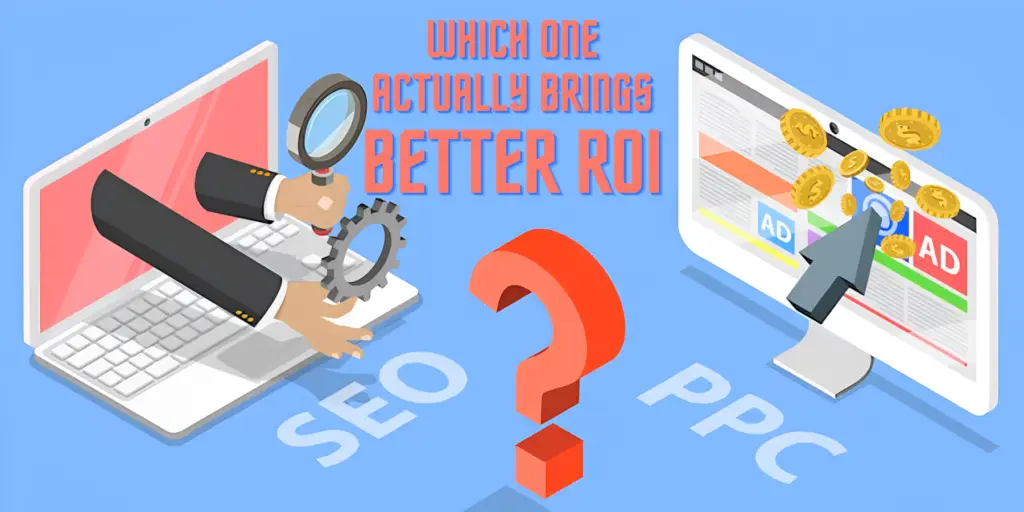
Should I spend money on SEO or run paid ads?
It’s one of the most hotly contested questions in digital marketing—and for good reason. Both SEO and paid ads promise visibility. Both can drive leads. Both can boost sales.
But when it comes to limited budgets and maximizing growth, the question really is:
Which one actually delivers better ROI?
At Rank Zio Digital, we’ve helped businesses in various sectors—from early-stage startups to scaling e-commerce businesses—and here’s the truth:
There isn’t a clear winner. But there’s a better way to think about it.
Breaking Down the Basics: SEO vs Paid Ads
Before we dive into the ROI discussion, let’s talk about what you’re actually paying for.
Search Engine Optimization (SEO) is all about getting organic search traffic. You don’t pay per click. Instead, you pay for technical optimization, content quality, authority, and long-term strategy.
Paid Ads (Google Ads, Meta Ads, PPC) enable you to show up instantly in front of your target audience. You pay for keywords or audiences and get charged per click.
The biggest difference?
SEO creates assets.
Paid ads buy attention.
That alone shifts the ROI calculation.
Organic Search vs Paid Search Results: The Trust Factor
When people search on Google, they get both paid and organic results. But what people do is quite revealing.
Many people tend to trust organic results more. They seem more authentic because they didn’t pay to get there.
But when it comes to high-intent searches like “buy now,” “near me,” or “best service provider,” paid ads reign supreme.
So when it comes to organic search vs paid search results, it’s not about which one gets more clicks, it’s about which one is more in line with your objective.
Organic search results convert on the basis of trust.
Paid search results convert on the basis of urgency.
Both are excellent. But they serve different purposes in the customer acquisition process.
The ROI of SEO: Slow Start, Strong Finish
SEO is never an overnight success. It takes time, usually 3 to 6 months before momentum is gained.
But once SEO momentum is gained, something magical happens.
Traffic flows in without increasing spend.
Cost per acquisition goes down over time.
Brand credibility goes up.
For small businesses, this snowball effect can be a game-changer when it comes to profitability.
A well-optimized blog page, service page, or category page can drive leads for years. That’s not an expense. That’s an asset.
From an ROI standpoint, SEO always beats paid advertising because it doesn’t rely on continuous spending.
But it does require patience, and that’s where most businesses fail.
The ROI of Paid Ads: Speed and Precision
Paid advertising is a different animal altogether. It’s immediate.
You can start a campaign today and start seeing traffic in a matter of hours. This makes paid advertising extremely valuable for:
- Product launches
- Limited-time offers
- Market validation
- Competitive positioning
- Data-rich campaigns
Paid advertising campaigns also offer immediate data insights. You can see what keywords convert, what messaging works, and what audiences perform best.
But here’s the catch:
The second you stop advertising, visibility drops to zero.
ROI on paid advertising campaigns is highly dependent on optimization, budgeting, and competitive bidding. In high-demand markets, cost per click can rise rapidly – eating into profit margins.
Paid advertising campaigns are incredible accelerators. However, they are not long-term foundations.
So, Which One Offers Better ROI?
It depends on your business stage.
If you’re a startup looking to validate a business idea, paid advertising campaigns offer immediate feedback. Speed trumps sustainability at this point.
If you’re a small business looking to cut marketing expenses in the long run, SEO is your best investment.
For e-commerce sites, paid advertising campaigns offer immediate sales, while SEO offers evergreen traffic for category pages, buying guides, and other information-heavy content.
For marketing managers, the best ROI on SEO vs Paid Ads is rarely found by choosing one over the other. It’s found by integrating them.
The Best Approach to SEO and Paid Advertising Campaigns
The most successful businesses don’t see SEO and paid advertising campaigns as rivals.
They see them as complementary tools.
Here’s how we approach SEO and paid advertising campaigns at Rank Zio Digital:
First, use paid advertising campaigns to gain data insights. Identify high-converting keywords and audience behavior.
Second, create SEO content around these validated terms. This approach eliminates guesswork and improves ranking success.
Third, systematically decrease reliance on costly keywords as organic visibility increases.
This hybrid approach drives short-term revenue and long-term sustainability.
It’s not a question of which side to take.
It’s a question of building a marketing machine.
Cost Comparison at a Glance
SEO involves initial investment in strategy, content, and optimization. However, over time, the cost per lead tends to decrease.
Paid advertising involves continuous budget allocation. Results depend on continuous optimization and management.
In short:
SEO involves building property.
Paid advertising involves renting space in a high-end location.
Both drive revenue.
Only one appreciates in value over time.
The Real Verdict
For rapid adoption, paid advertising wins hands down.
For sustainable growth and establishing brand dominance, SEO drives superior long-term ROI.
For maximum profitability, the answer is integration.
Businesses that focus solely on paid advertising often face challenges in rising acquisition costs. Businesses that focus solely on SEO may experience slower growth.
However, businesses that strategically integrate both approaches consistently outperform rivals.
Final Thoughts
The SEO vs Paid Ads debate is not about which side wins.
It is about recognizing:
- Your timeline
- Your growth goals
- Your budget flexibility
- Your competitive dynamics
At Rank Zio Digital, we have witnessed businesses experience radical shifts when they stop asking “Which side is better?” and begin asking “How can we integrate both for maximum ROI?”
Because in today’s digital world, authority drives growth.
And growth, when driven by a strategic approach, becomes predictable.
Frequent Asked Questions
1. Is SEO better than paid ads for long-term ROI?
SEO typically delivers stronger long-term ROI because it builds sustainable organic traffic without ongoing cost per click. While it requires time and consistent optimization, the cumulative effect often reduces customer acquisition costs compared to paid ads.
2. Which is faster: SEO or paid ads?
Paid ads work faster. You can generate traffic almost immediately after launching a campaign. SEO usually takes several months to build authority and rankings, but it creates long-term visibility once established.
3. What is the main difference between organic search and paid search results?
Organic search results are earned through content quality, relevance, and authority. Paid search results appear because advertisers bid for placement. Organic builds credibility over time, while paid ads provide instant exposure.
4. Can businesses use both SEO and paid ads together?
Yes, and this is often the most effective strategy. Paid ads can generate quick traffic and valuable keyword data, while SEO builds sustainable growth and long-term brand authority.
5. What is the best strategy for SEO vs paid ads?
The best strategy is integration. Use paid campaigns to test high-performing keywords and audience behavior, then invest in SEO to reduce long-term acquisition costs and increase profitability over time.